

The Summer Salad Myth: How Your ‘Healthy’ Bowl May Be Slowly Extinguishing Your Digestive Fire
6/08/2026

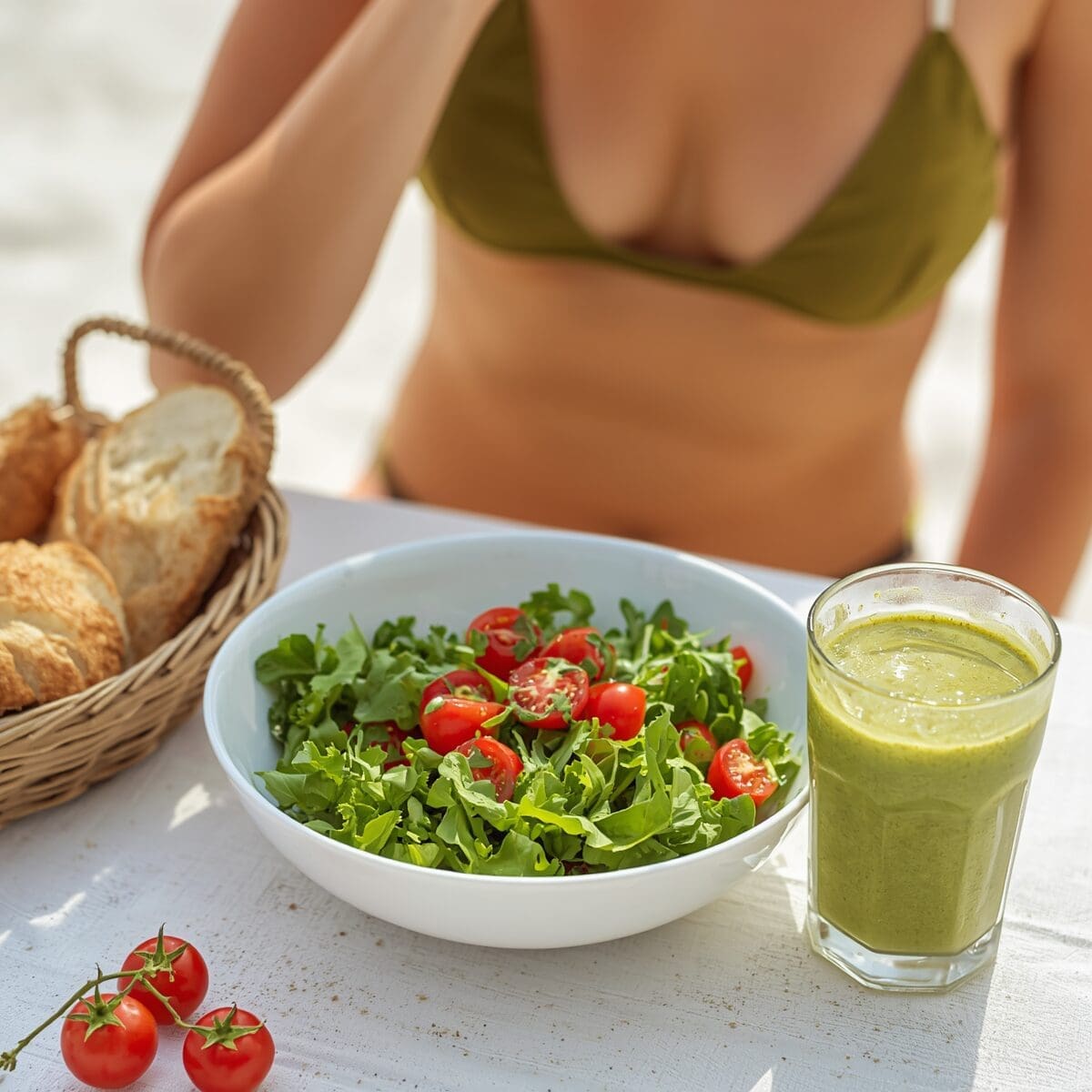
I live in Lisbon. And right now, as June arrives and the city climbs past 30 degrees, I completely understand the craving. The longing for something cold. Something green and crunchy. A big bowl of leaves, cucumber, hummus on the side, maybe an iced drink from one of the juice bars scattered across the city. The body wants to cool down, and the wellness world has a very convenient answer waiting: the summer salad.
Walk into any health-conscious spot in Lisbon right now — for e.g. the beautiful Aura Wellness Bar in Santos, the bright, plant-filled counters of The Happy Salad near Avenidas Novas or the many Honest Greens — and the message is consistent and seductive: raw is clean, cold is refreshing, leaves are virtuous. And I am not here to take that away from you entirely. But I am here, as an Ayurvedic Therapist to offer you something more: nuance.
Because what feels instinctively cooling to the senses is not always what the body — specifically the digestive body — actually needs. And Ayurveda, the ancient Indian science of life that has been observing the relationship between food, season, and the human body for over five thousand years, has quite a lot to say about that gap between craving and nourishment.
Not because green salads are wrong. But because the body that digests them matters just as much as the food itself. And in this city, at this temperature, in these bodies — many of which are already running on stress, irregular sleep, and digital overstimulation — the summer salad bowl may be doing something very different from what you think.
Agni: The Intelligence at the Centre of Your Digestion
In Ayurvedic physiology, the concept of Agni — digestive fire — is not metaphor. It is a precise, measurable biological intelligence that governs how we transform food into tissue, energy, and consciousness.
The Charaka Samhita places Agni at the very root of health: ‘Arogya mulam Agni’ — good health begins with fire.
When Agni is strong, food is fully digested, nutrients are properly absorbed, waste is efficiently eliminated, and the mind is clear. When Agni is weak — or in its classical state of Mandagni (sluggish fire) — food is only partially transformed. The undigested material, called Ama, accumulates. Ama is sticky, heavy, and toxic. It clogs the Srotas (channels of the body), clouds the mind, and over time, becomes the seed of disease.
Now consider what happens when we pour cold, raw, hard-to-digest food onto an already compromised digestive fire. Imagine adding wet wood to a struggling flame. The fire doesn’t suddenly grow stronger. It smoulders, produces smoke, and eventually goes out.
What Raw Food Actually Does to Your Body
Raw vegetables and cold dips like hummus are structurally dense. The cell walls of uncooked plants are largely intact — and the human digestive system requires significantly more enzymatic energy to break them down compared to cooked or lightly processed foods. In Ayurvedic terms, raw food is:
- Guru (heavy) — it demands more digestive effort
- Ruksha (dry) — it has a drying quality that aggravates Vata
- Hima (cold) — cold quality directly suppresses Agni
- Kashaya and Tikta in Rasa — astringent and bitter tastes predominate, which in excess can constrict and deplete
None of this makes raw food forbidden. In Ayurveda, no food is categorically bad.
The question is always: for whom, in what quantity, in what season, and with what digestive capacity?
A small green salad as a side dish alongside a warm, nourishing meal? Perfectly fine for most people. A daily routine of large raw salad bowls, cold hummus, chilled cucumber slices, and iced water — consumed as your primary weight-loss strategy? That is a very different conversation.
The Summer Body Culture and Its Hidden Cost
Let’s be honest about what drives the summer salad obsession. It is rarely about health. It is about the bikini. It is about the summer body — that aspirational, socially-constructed ideal that descends on us every April and does not leave until October. We eat less, eat cold, eat raw, because we have absorbed the equation: less food, lighter food, colder food = thinner body = acceptable body.
Ayurveda does not recognise this equation. It recognises a different one:
weak Agni → poor metabolism → accumulation of Ama → weight gain, bloating, fatigue, inflammation.
In other words, chronically suppressing your digestive fire through cold and raw food does not make you lighter. It makes your metabolism more sluggish. It creates the very heaviness and retention you were trying to escape.
The cruel irony of the summer salad diet is that, for many people — especially those with Vata or Kapha constitutions — it produces exactly the opposite of its intended effect.
Doshas and Raw Food: Who Tolerates It, and Who Doesn’t
Ayurveda describes three fundamental biological principles — Vata, Pitta, and Kapha — that govern our physiology, psychology, and digestion. Each person carries a unique blend of these three, called their Prakriti (constitutional nature). And each responds to raw, cold food very differently.
Pitta: The One Who Can (Sometimes)
Pitta types are governed by fire and water. They tend to have the strongest digestive capacity — their Agni is sharp, their metabolism fast, their body temperature naturally elevated. In the heat of summer, when Pitta is seasonally aggravated, some cooling, lightly raw foods can actually provide relief. A cucumber and mint salad, eaten at room temperature, with warming spices like cumin or coriander — this can genuinely benefit a Pitta person in peak summer.
But even here, nuance matters. Excessive raw food, especially with acidic dressings, will overheat a Pitta digestive system and create inflammation rather than balance.
Kapha: The One Who Needs Caution
Kapha types are governed by earth and water. Their Agni is inherently slower — not broken, but measured. Raw and cold foods amplify exactly the qualities Kapha already has in abundance: heaviness, moisture, sluggishness. For a Kapha person eating large raw salads in the hope of losing weight, the outcome is typically the opposite: digestive stagnation, water retention, a sense of heaviness, and paradoxically, increased Ama accumulation. Kapha benefits far more from warm, lightly spiced, cooked vegetables than from any amount of raw leaves.
Vata: The Most Vulnerable
And then there is Vata. Governed by air and ether, Vata types carry inherently irregular and sensitive Agni — it flickers, fluctuates, and extinguishes easily. Vata people are often slender, creative, quick-moving, but anxious and prone to dryness, constipation, bloating, and nervous system dysregulation. Raw, cold, dry food is perhaps the single most destabilising dietary choice for a Vata type. It directly feeds the imbalance.
The cruel contemporary twist? We live in a society that is, collectively, in a state of high Vata aggravation. This is not incidental — it is structural.
We Live in a Vata Age — And It Is Making Everything Worse
Vata is characterised by movement, speed, dryness, irregularity, and dispersal. Look at the defining qualities of modern life: constant digital stimulation, irregular sleep, multitasking, information overload, frequent travel, social fragmentation, economic uncertainty, the relentless acceleration of everything. These are Vata qualities, lived at scale, across entire societies.
The result is a pandemic of Vata imbalance — not always recognised as such, but expressed as chronic anxiety, poor sleep, digestive irregularity, bloating and gas, dry skin and hair, joint cracking, racing thoughts, difficulty concentrating, emotional volatility, and a persistent sense of being ungrounded.
For these people — and they are many — the summer salad diet is not neutral. It is actively harmful. It introduces more cold, dry, rough, airy qualities into a system already overwhelmed by exactly those qualities. It is, in Ayurvedic terms, a case of like increasing like.
If you recognise yourself in this portrait, the most compassionate and effective thing you can do for your digestion is not to eat less. It is to eat warm, cooked, unctuous, gently spiced food. To drink warm water. To eat at regular times. To slow down around meals. These are not deprivation strategies. They are the restoration of Agni.
And here is where it gets remarkable: modern science, five thousand years later, is arriving at strikingly similar conclusions — using entirely different language.
What Modern Science Now Confirms: Your Gut Microbiome Agrees with Ayurveda
The gut microbiome — the vast community of trillions of bacteria, fungi, and other microorganisms living in your intestinal tract — has become one of the most intensively researched fields in modern medicine. And the findings are, for anyone familiar with Ayurveda, profoundly familiar.
Cooking transforms the microbiome — and that matters
In a landmark study published in Nature Microbiology, researchers demonstrated for the first time that cooking food fundamentally alters the composition of the gut microbiome in both mice and humans. Participants who ate raw plant-based diets showed significant changes in gut bacterial populations — and mice on raw diets actually showed reduced bacterial diversity and lost more weight, but when their gut bacteria were transplanted into mice eating normal food, those mice gained fat. The researchers concluded that the microbiome effects of raw food are complex, non-linear, and highly individual — not the straightforward ‘cleansing’ effect the wellness industry implies. They were surprised to discover that no one had studied the fundamental question of how cooking itself alters the composition of the microbial ecosystems in our guts. Cooked plant foods, particularly starchy vegetables, made significantly more nutrients bioavailable and supported different — and in many contexts, healthier — microbial communities than their raw counterparts.
This is Agni in molecular language. Cooking pre-digests food, reduces the energetic burden on the digestive system, and creates conditions in which the gut microbiome can thrive. Ayurveda has described this for millennia using the concept of Pachana — the transformative, digestive action of heat.
Cold food temperature directly suppresses digestive function
Research published in the British Journal of Nutrition found that cold food and beverage consumption was measurably linked to increased anxiety, sleep disturbances, and abdominal fullness — particularly in summer. Earlier gastroenterological studies confirmed that cold temperatures have major effects on postprandial motility: cold drinks slow gastric emptying, retard the movement of food through the digestive tract, and increase visceral sensitivity. In plain terms: cold food slows your digestion down, increases discomfort, and can trigger nervous system dysregulation. This is what Ayurveda calls the Hima (cold) quality suppressing Agni — not metaphysically, but measurably, at the level of gut motility and neurological response.
Chronic stress destroys the microbiome — and this is the Vata connection
Perhaps the most striking convergence between Ayurvedic theory and contemporary research lies in the relationship between stress, the nervous system, and gut health. Multiple peer-reviewed studies now confirm that chronic psychosocial stress activates the hypothalamic-pituitary-adrenal (HPA) axis, triggering sustained release of cortisol and catecholamines that directly alter gut microbiome composition, increase gut permeability (leaky gut), and promote microbial dysbiosis. Research published in the Journal of Applied Physiology describes this as a positive feedback loop: stress alters the microbiome, and the dysbiotic microbiome then amplifies the neuroendocrine stress response — making the body more reactive, more inflamed, and less able to digest and absorb food effectively.
In Ayurvedic terms, this is the Vata-gut nexus. Vata governs the nervous system, movement, and — crucially — the colon, which is the primary seat of Vata in the body and the location of the majority of the gut microbiome. A 2020 study published in the Journal of Biosciences noted this directly: ‘The primary location of Vata, according to Ayurveda, is in the colon, where most of the gut microbiome is located.’ Chronic Vata aggravation — through stress, irregular routines, overstimulation — directly compromises the microbial ecosystem that modern science now recognises as a ‘vital organ’ governing immunity, metabolism, mood, and brain function.
Your constitution shapes your microbiome — and Ayurveda called it first
One of the most exciting emerging areas of microbiome research is the discovery that gut microbial profiles vary significantly between individuals based on constitutional factors — not just diet. A 2020 study in the Journal of Biosciences found gut microbial patterns associated with extreme Prakriti phenotypes (Vata, Pitta, Kapha), noting that Prakriti appears to have a genomic basis and that ‘human microbiome research reiterates the fundamental principles of Ayurveda for creating a healthy gut environment by maintaining the individual-specific microbiome.’ Research published in the Journal of Drug Research in Ayurvedic Sciences (2025) found that ‘glycaemic responses vary significantly among individuals consuming the same foods, lending credibility to Ayurveda’s individualised dietary guidance.’ Even SCFA (short-chain fatty acid) production — the key metabolic output of a healthy microbiome, essential for gut lining integrity, immune regulation, and brain health — varies across Prakriti types.
This is the scientific validation of something Ayurvedic practitioners have known for five thousand years: there is no universal diet. There is only the right diet for this body, in this season, at this stage of life. The concept of precision nutrition, currently at the frontier of microbiome science, is Ayurveda translated into genomics.
Fibre is complex — and context is everything
The wellness industry treats fibre as categorically good and more as better. Modern microbiome research is more nuanced. While dietary fibre absolutely supports microbial fermentation and the production of beneficial SCFAs like butyrate and propionate — which nourish the gut lining, modulate immunity, and protect against inflammation — the individual response to fibre varies significantly. A 2023 study in Frontiers in Microbiology confirmed that different fibres produce distinct SCFA profiles across individuals, and that the overall bacterial community shows ‘substantial stability and resilience’ rather than dramatic transformation in response to fibre supplementation. In other words: adding large quantities of raw vegetable fibre does not automatically create a healthier microbiome. What matters is the capacity of your specific gut ecosystem to ferment and process that fibre — which is, in Ayurvedic terms, a function of the strength and quality of your Agni.
Signs Your Agni Is Struggling
Ayurveda gives us clear indicators of Mandagni — diminished digestive fire. You don’t need a laboratory test. You need to pay attention.
- Bloating and gas after meals, especially after raw or cold food
- A feeling of heaviness or lethargy after eating
- Irregular appetite — sometimes ravenous, sometimes none at all
- Constipation alternating with loose stools
- A thick white or yellowish coating on the tongue in the morning
- Persistent fatigue that sleep doesn’t resolve
- Skin problems: dullness, breakouts, dryness, or puffiness
- Brain fog, difficulty concentrating, low mood
- Food sensitivities that seem to multiply over time
- A sense that your body holds onto weight regardless of what you eat
These are not minor inconveniences. In Ayurvedic understanding, they are early signals of Ama accumulation — the precursors to deeper imbalance if left unaddressed.
Signs Your Agni Is Thriving
A strong, balanced Agni — Sama Agni — expresses itself unmistakably:
- Clear, genuine hunger at consistent meal times
- Comfortable digestion with no bloating, cramping, or discomfort
- A clean tongue with no significant coating
- Consistent energy throughout the day, without post-meal crashes
- Clear, glowing skin
- Regular, effortless elimination every morning
- Mental clarity and emotional stability
- A healthy, stable weight maintained without chronic restriction
- Sleep that restores — you wake up rested
This is what genuine health feels like in the body. Not a number on a scale, not a particular size of jeans, not the ability to finish a large raw salad and feel virtuous. Embodied, comfortable, energised living.
How to Eat Raw Food the Right Way
Ayurveda is not a tradition of prohibition. It is a tradition of intelligence. Raw food has genuine value — but it is best approached with the following principles:
1. Timing matters
The body’s digestive capacity peaks at midday, when the external sun mirrors internal Agni. If you are going to eat raw food, eat it at lunch — never as a cold dinner or late-night snack. Evening is when Agni naturally diminishes and Vata increases.
2. Quantity matters
A small side salad alongside a cooked meal is very different from a large bowl of raw leaves as your entire meal. Think of raw vegetables as a supporting element, not the centrepiece.
3. Preparation matters
Marinated vegetables, lightly pickled salads, and dressings made with warming spices — olive oil with cumin, apple cider vinegar with ginger, lemon with black pepper — pre-digest the raw ingredients and make them significantly easier on Agni. Room temperature always outperforms cold from the refrigerator.
4. Season matters
Summer is Pitta season. Some raw foods can be appropriate then — but they should be hydrating and cooling, not heavy and dry. In autumn and winter, when Vata dominates, prioritise cooked food almost entirely.
5. Your constitution matters most
A Pitta person in summer can handle a fresh garden salad with far more ease than a Vata person in October. This is why knowing your Dosha is not a luxury or a wellness trend — it is the foundational knowledge that allows you to make genuinely intelligent choices about what you put in your body.
What Changes When You Know Your Constitution
There is a particular kind of exhaustion that comes from following generalised health advice that was never designed for your body. The high-raw diet that your colleague thrives on but leaves you bloated and anxious. The intermittent fasting protocol that works beautifully for your friend but sends your cortisol through the roof. The cold smoothie habit that someone on Instagram swears by, while your digestion quietly deteriorates.
This exhaustion is not a personal failure. It is the predictable result of applying generic frameworks to a specific, unique, unrepeatable body.
When you understand your Prakriti — your Ayurvedic constitutional type — something shifts. You stop following trends and start following your body. You understand why certain foods energise you and others drain you. You see the patterns in your digestion, your sleep, your mood, your skin. You stop fighting your nature and start working with it.
An Ayurvedic assessment is not a personality quiz or a wellness gimmick. It is a detailed, personalised mapping of your physical and psychological constitution — your digestive tendencies, your seasonal vulnerabilities, your specific Dosha imbalances, and the dietary and lifestyle practices that will genuinely restore balance for you, not for a theoretical average person.
It includes guidance on the right foods for your constitution and current imbalance, the right times to eat, how to support Agni, how to move, how to rest, and how to adapt through seasons. It turns general Ayurvedic wisdom into a precise, personal roadmap.
Because your body is not a trend. It deserves something more intelligent than that.
→ Book your personalised Ayurvedic assessment at soulveda.art

