

Spring Ayurveda Guide: Kapha Season Explained + How to Balance Vata, Pitta & Kapha in Spring
3/20/2026

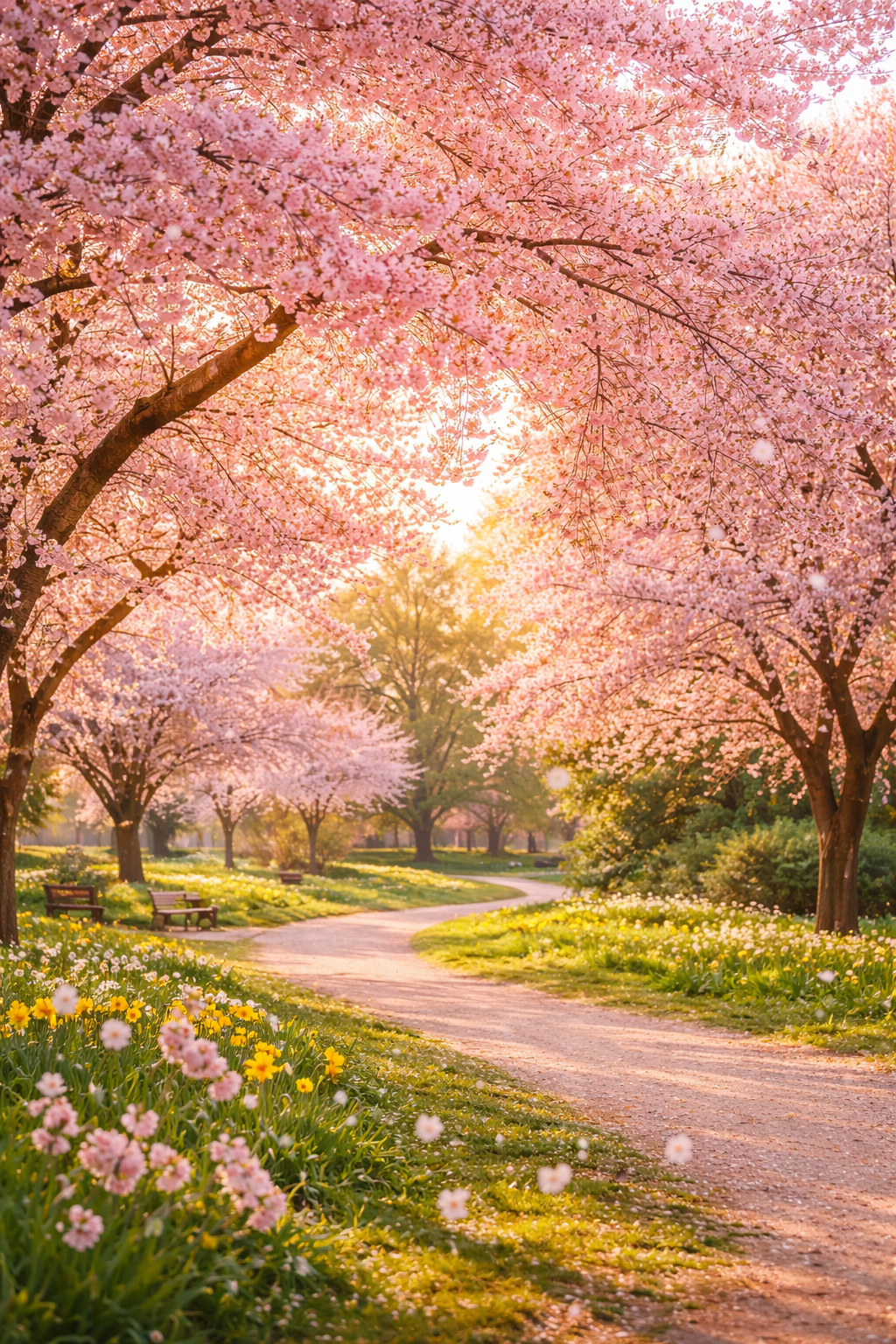
Which Dosha Dominates Spring & Who Suffers?
Today marks the beginning of spring.
You can feel it, even before you consciously notice it.
The air carries a softness. The light lingers a little longer. There is a subtle scent in the wind—fresh, moist, alive. Birds are louder, more playful. Trees begin to stretch again, slowly revealing hints of green.
And something in us responds.
We feel a quiet lift in mood. A desire to step outside. To connect. To move. To begin again.
Modern science would say: increasing daylight boosts serotonin, regulates circadian rhythm, and slowly enhances our energy levels.
In Ayurveda, we would say: the body is aligning again with the rhythm of nature.
But this transition is not the same for everyone.
Because while spring feels like a renewal, it is also a delicate shift of internal balance—and each dosha experiences it differently.
Which Dosha Dominates Spring?
In Ayurveda, spring (Vasanta Ritu) is governed primarily by Kapha dosha.
Kapha is made of earth and water elements—heavy, moist, cool, stable.
And if you look around… spring reflects exactly this:
- melting moisture in the air
- damp soil
- thicker atmosphere
- slower mornings
During winter, Kapha accumulates in the body.
When spring arrives, the warming temperatures begin to liquefy this accumulated Kapha.
This is why:
- allergies increase
- sinus congestion appears
- digestion feels slower
- lethargy or emotional heaviness can arise
Modern medicine sees this as:
- increased histamine response (allergies)
- immune shifts
- seasonal fatigue due to metabolic adaptation
Ayurveda has been describing this for thousands of years—just in a different language.
Who Benefits in Spring? And Why?
Vata Dosha – Often Feels Relief
Vata (air + space) is dry, cold, and light—qualities that dominate autumn and early winter.
Spring brings:
- warmth
- moisture
- softness
These qualities naturally balance Vata.
Why Vata benefits:
- moisture reduces dryness (skin, joints, nervous system)
- warmth calms anxiety and restlessness
- more stable environment grounds their energy
Modern lens:
- improved mood due to sunlight
- nervous system regulation improves with temperature and routine
Vata often feels:
- emotionally lighter
- more creative
- more social
Pitta Dosha – Stable but Sensitive
Pitta (fire + water) thrives in moderate conditions.
Spring is not too hot yet—so Pitta often feels balanced and productive.
Why Pitta benefits (initially):
- no excessive heat yet
- improved digestion after winter heaviness
- clearer mental focus
But as spring progresses toward summer:
- heat + moisture can increase inflammation
Pitta needs early awareness, not correction later.
Kapha Dosha – Most Challenged
Kapha (earth + water) is the dominant dosha of spring.
Which means… it can easily become too much.
Why Kapha struggles:
- already heavy → becomes heavier
- already moist → becomes congested
- already slow → becomes sluggish
This leads to:
- fatigue
- brain fog
- sinus congestion
- emotional dullness
Modern parallels:
- seasonal allergies
- mucus buildup
- slower metabolism post-winter
Spring is Kapha’s detox season.
How to Stay Balanced in Spring
The goal in Ayurveda is not to “fight” the season—but to move with it intelligently.
For Kapha: Lighten, Move, Awaken
Focus: stimulation, warmth, lightness
- Morning movement (non-negotiable)
Go on a Walk. Even 20 minutes changes everything. - Dry & warm foods
Prefer: sautéed vegetables, lentils, spices (ginger, black pepper)
Avoid: heavy dairy, cold smoothies, excess bread - Start the day with warm lemon water + ginger
Supports digestion & clears mucus - Reduce daytime sleep & oversleeping
This increases Kapha heaviness - Declutter your space
Kapha accumulates externally too—your home affects your mind
For Vata: Stay Grounded While Expanding
Focus: stability + gentle warmth
- Do not over-socialize suddenly
Spring excitement can scatter Vata - Keep warm, cooked meals
Even if weather feels warm—avoid too many raw salads - Maintain a routine
Sleep, meals, and movement at consistent times - Gentle creative practices
Journaling, Art sessions—this is ideal Vata nourishment - Oil massage (Abhyanga)
Especially with sesame oil—keeps nervous system calm
For Pitta: Stay Cool, Don’t Overdo
Focus: moderation + cooling
- Avoid competitive overdrive
Spring energy can push Pitta into burnout - Eat bitter & fresh greens
Local markets → arugula, spinach, herbs - Stay hydrated (not iced)
Room temperature water with mint or fennel - Take breaks in nature
Nature is perfect for a quiet reset - Evening wind-down rituals
Reduce screen time, avoid late-night stimulation
Why This Transition Needs Gentleness
Spring is often romanticized as a “fresh start.”
But Ayurveda reminds us:
Transition is not a switch. It is a process.
The body is:
- melting accumulated winter density
- adjusting metabolism
- recalibrating hormones and energy
If we rush into:
- intense workouts
- drastic diets
- over-socializing
…we create imbalance instead of renewal.
If you are feeling this seasonal shift—whether as lightness, restlessness, or heaviness—this is exactly where Ayurveda becomes powerful.
✨ You can explore your personal dosha balance through a 1:1 Ayurveda Consultation
✨ Or join one of my Art & Community Workshops in Lisbon, where we gently translate these seasonal changes into awareness, expression, and grounded transformation
→ Explore more at: www.soulveda.art

