


In the modern wellness world, the word detox is everywhere.
Juice cleanses, fasting protocols, green powders, elimination diets. Many of them promise quick results and a fresh start for the body. But often these approaches focus only on the surface.
Ayurveda, the traditional system of medicine from India that has been practiced for thousands of years, looks at detoxification in a much deeper way.
In Ayurveda, cleansing is not about forcing the body into extreme restriction.
It is about removing what blocks the body’s natural intelligence.
When the body’s internal systems are functioning well, detoxification happens naturally every day through digestion, elimination, sweat, breath, and metabolic processes.
But modern lifestyles often disrupt these natural rhythms. Stress, irregular eating habits, environmental toxins, emotional strain, and poor digestion gradually lead to the accumulation of what Ayurveda calls Ama — toxic residue in the body.
Over time, these toxins begin to affect digestion, energy levels, mental clarity, skin health, and the balance of the doshas.
This is where one of Ayurveda’s most profound healing systems comes into play.
Panchakarma.
Panchakarma is Ayurveda’s classical method of deep cleansing and rejuvenation.
It is not simply a detox. It is a complete therapeutic reset for body and mind.
What Is Panchakarma?
The word Panchakarma comes from Sanskrit and means “five actions” or “five therapeutic procedures.”
These five cleansing therapies are designed to remove toxins that have accumulated in the body and restore balance to the doshas — Vata, Pitta, and Kapha.
The classical Panchakarma treatments include:
• Vamana – therapeutic vomiting to eliminate excess Kapha
• Virechana – purgation therapy to remove excess Pitta
• Basti – medicated enemas to balance Vata
• Nasya – cleansing of the nasal passages and head region
• Raktamokshana – blood purification (less commonly practiced today)
These therapies are never applied randomly. They are selected carefully according to a person’s constitution, current imbalances, and health conditions.
But Panchakarma does not begin with these procedures.
Before the body can safely release toxins, it must first be prepared.
This preparation stage includes therapies such as:
• Abhyanga — warm herbal oil massage
• Swedana — therapeutic sweating treatments
• Internal oleation, often through drinking small amounts of medicated ghee
These steps help loosen toxins stored in deeper tissues and guide them toward the digestive system so they can be eliminated safely.
Ayurveda understands that cleansing must be gradual and intelligent, not aggressive.
The Ayurvedic Understanding of Toxins: Ama
One of the key concepts in Ayurvedic detoxification is Ama.
Ama is the toxic residue that forms when digestion is incomplete.
In Ayurveda, digestion is governed by Agni, the digestive fire. When Agni is strong, food is transformed into nutrients that nourish the tissues.
But when digestion is weak — due to stress, overeating, irregular routines, or incompatible food combinations — food cannot be fully processed.
Instead, it leaves behind Ama.
Ama is described as heavy, sticky, and obstructive. It accumulates in the digestive tract and begins to circulate through the body, gradually blocking the channels of communication known as Srotas.
This blockage can lead to many common health complaints, including:
• fatigue and low energy
• digestive problems
• brain fog
• joint pain
• skin conditions
• hormonal imbalance
• emotional heaviness
Ayurveda therefore sees detoxification not as a cosmetic wellness trend, but as a fundamental aspect of maintaining health.
As described in the Charaka Samhita, one of Ayurveda’s foundational texts:
“When the body is cleansed of impurities, digestion becomes strong, the senses become clear, and health is restored.”
— Charaka Samhita
Panchakarma and the Mythological Roots of Cleansing
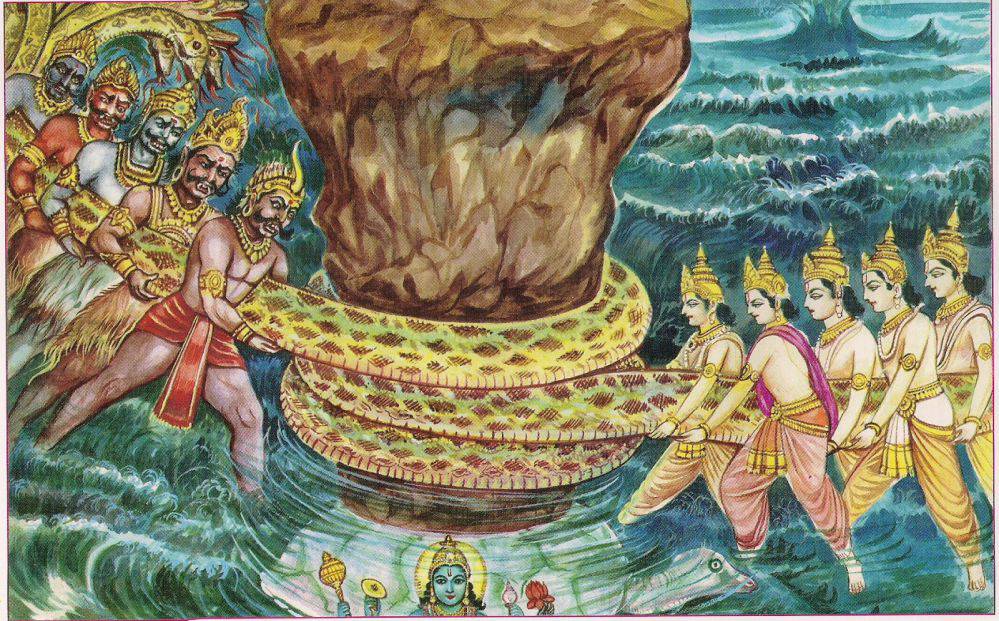
Ayurveda is deeply connected to Indian philosophy and mythology.
One of the most beautiful metaphors for detoxification comes from the famous Vedic story known as Samudra Manthan — the Churning of the Cosmic Ocean.
In this story, the gods and demons churn the cosmic ocean in search of Amrita, the nectar of immortality.
But before the nectar appears, something unexpected rises from the ocean.
Poison.
The churning process first brings hidden toxins to the surface before the healing nectar can emerge.
This story mirrors the process of Panchakarma.
When the body begins to detoxify, toxins that have been hidden in tissues start to move and surface. Sometimes this can create temporary discomfort as the body releases what it has been holding.
But just like in the mythological story, this phase of cleansing allows something deeper to appear afterward:
renewal, vitality, and clarity.
The Role of Ghee in Ayurvedic Detox
One of the most fascinating aspects of Panchakarma preparation is the use of ghee, or clarified butter.
In the internal oleation stage of detox, small quantities of medicated ghee may be consumed over several days. This practice is known as Snehapanam.
For many people unfamiliar with Ayurveda, this can seem surprising.
How could drinking ghee support detoxification?
In Ayurveda, ghee is considered one of the most intelligent healing substances in nature. It is believed to penetrate deeply into tissues and bind to fat-soluble toxins.
Because many toxins are stored in fat tissue, ghee helps draw them out and guide them toward the digestive system for elimination.
Beyond detoxification, ghee also:
• nourishes the nervous system
• supports digestion
• lubricates tissues and joints
• enhances the absorption of herbal medicines
The classical Ayurvedic texts describe this stage as preparing the body for purification.
“Properly administered oleation nourishes the tissues, loosens toxins, and prepares the body for purification.”
— Charaka Samhita
The Benefits of Panchakarma
When performed under proper supervision, Panchakarma can support many aspects of physical and mental health.
People often experience improvements such as:
• stronger digestion
• increased energy
• clearer skin
• improved immunity
• better sleep
• hormonal balance
• reduced inflammation
• enhanced mental clarity
Many people also report a deep sense of emotional release and mental calm during Panchakarma.
Ayurveda recognizes that toxins are not only physical.
Stress, unresolved emotions, and mental overload can also accumulate in the body.
By calming the nervous system and restoring digestive strength, Panchakarma supports both physical cleansing and emotional reset.
Who Can Benefit From Panchakarma?
Ayurvedic detox therapies may be beneficial for people experiencing:
• digestive disturbances
• chronic fatigue
• burnout or nervous system exhaustion
• skin issues
• hormonal imbalances
• stress-related health conditions
• brain fog and lack of clarity
Panchakarma is also traditionally recommended during seasonal transitions, especially spring and autumn, when the body naturally shifts its internal balance.
However, Panchakarma should always be performed under the guidance of an experienced practitioner.
It is a powerful therapeutic process, and treatments must always be adapted to the individual.
Detox in Ayurveda Is Not About Restriction
One of the most beautiful aspects of Ayurveda is that detoxification is not about punishing the body.
It is not about starving, suppressing cravings, or pushing the body beyond its limits.
Instead, Ayurveda focuses on supporting the body’s natural intelligence.
Through nourishing foods, healing oils, herbal therapies, rest, and mindful routines, the body gradually returns to its natural balance.
Healing in Ayurveda is not about fighting the body.
It is about listening to it.
Panchakarma as a Path to Renewal
Modern life often fills our bodies and minds with invisible layers of stress and overload.
Ayurvedic detox offers a path back to simplicity.
A return to rhythm.
A return to clarity.
Panchakarma reminds us that healing is not always about adding more — more supplements, more rules, more effort.
Sometimes healing begins with letting go.
Letting go of what no longer belongs.
Allowing the body to breathe again.
And trusting the deep intelligence that has guided human life for thousands of years.
Frequently Asked Questions About Panchakarma Detox
Because Panchakarma is very different from modern detox trends, many people have practical questions before beginning the process. Here are some of the most common ones.
Does everyone have to drink ghee during Panchakarma (Snehapanam)?
No. Drinking ghee is a traditional preparation step used in many Panchakarma protocols, but it is not always required.
The purpose of Snehapanam is to loosen toxins stored in deeper tissues so they can be eliminated during cleansing therapies. However, Ayurveda always adapts treatments to the individual.
Depending on the person’s constitution, digestive strength, and health condition, the practitioner may adjust the dosage, shorten the protocol, or use alternative preparation methods.
What if I am unable to drink the ghee?
Some people simply cannot tolerate the taste or texture of ghee.
In such cases, Ayurveda offers other preparation methods such as:
• external oil treatments
• herbal therapies
• milder internal oleation approaches
• dietary preparation before detox
The goal is never to force a treatment but to support the body gently.
How do I know if my body cannot digest the ghee?
During the preparation stage, digestion is carefully monitored.
Signs that ghee may not be digesting properly can include:
• nausea
• strong heaviness in the stomach
• loss of appetite
• excessive bloating
• strong aversion to the smell or taste of ghee
If these signs appear, the practitioner may reduce or pause the intake. The body’s response always guides the process.
What are typical side effects during Panchakarma?
As toxins begin to move out of the tissues, some temporary reactions can occur.
These may include:
• mild headaches
• fatigue
• digestive changes
• emotional sensitivity
• body aches
• temporary skin reactions
These responses are usually short-lived and are often interpreted as part of the detoxification process. A properly guided Panchakarma should never feel extreme or unsafe.
What happens if I get my period during Panchakarma?
Menstruation is considered a natural cleansing phase in Ayurveda.
If menstruation occurs during Panchakarma, certain treatments may be paused or adjusted while the body completes its natural cycle.
The focus usually shifts to rest and gentle support until the cycle is finished.
Should I take medication to stop my period if Panchakarma is planned?
No.
Ayurveda respects the body’s natural rhythms, including the menstrual cycle. Suppressing menstruation with medication purely for detox purposes is generally not recommended.
Instead, the detox process can simply be adjusted if menstruation occurs.
How long does Panchakarma usually last?
Traditional Panchakarma programs can last anywhere from one to four weeks, depending on the depth of the treatment and the person’s health condition.
Shorter detox programs also exist, but classical Panchakarma includes preparation, cleansing, and recovery phases.
How often should Panchakarma be done?
Ayurveda traditionally recommends cleansing once or twice per year, especially during seasonal transitions.
Spring and autumn are considered particularly beneficial times for detoxification.
If you are curious about Ayurvedic detox or Panchakarma therapy and would like to explore whether this approach could support your own healing journey, you can learn more about my Ayurveda consultations and therapeutic programs at:

