

Why Panchakarma Works Better in Your Own Environment (and Why Europeans Often Struggle in India)
6/12/2026

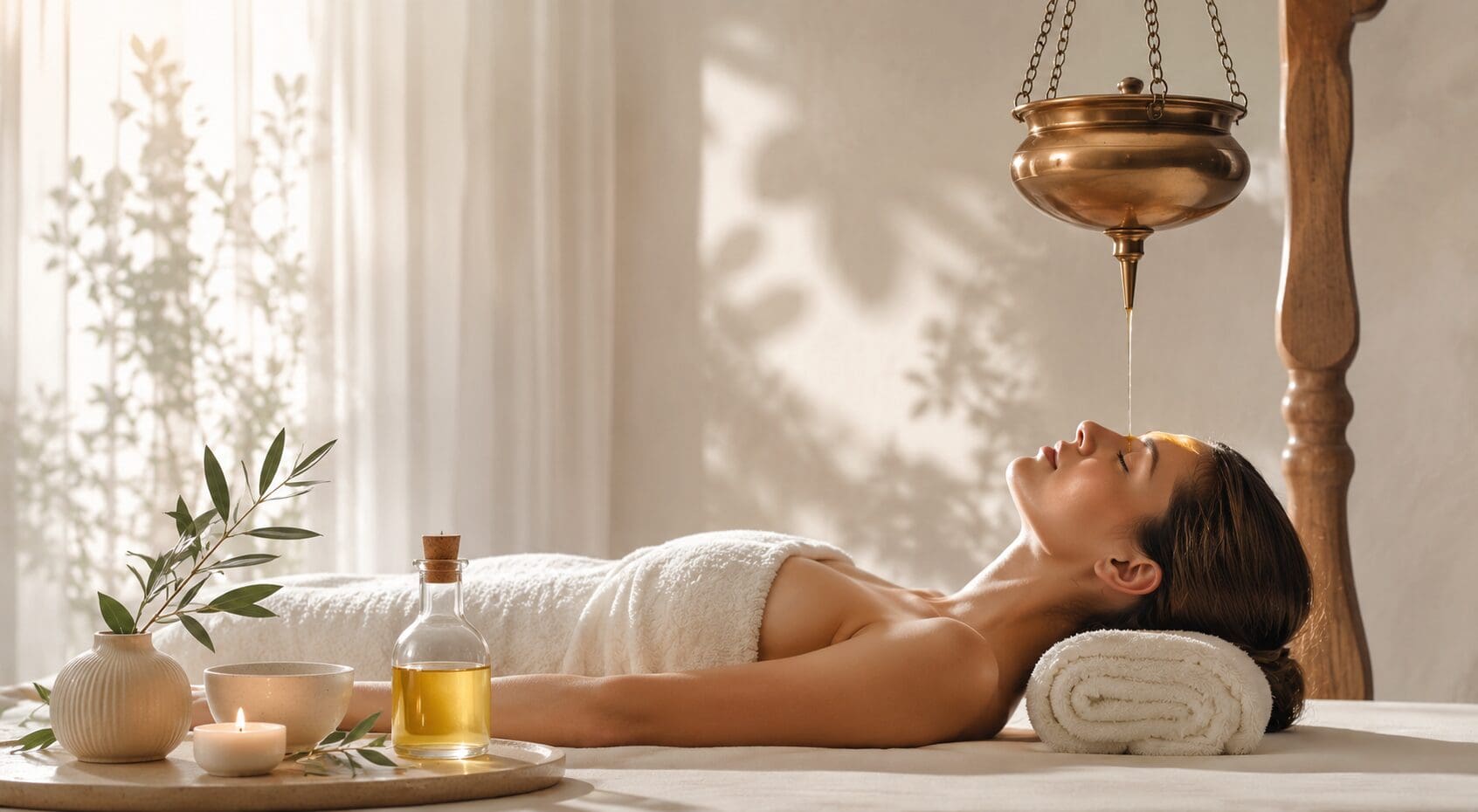
There is a moment many of us know well. A heaviness that has settled in — not just in the body, but in the mind. A fatigue that sleep does not fix. A sense that something deeper needs to shift, but life keeps moving and there is no clear path to stop.
If you have found yourself searching for something more than symptom management — something that addresses the root — you may already have come across the word Panchakarma.
This article is your complete guide: what it is, where it comes from, why it works, and why the most sustainable version of this ancient practice may not require a flight to India at all.
What Is Panchakarma? The Ancient Five-Action Cleanse
The word Panchakarma comes from Sanskrit: pancha means five, and karma means actions. It is one of the most revered and comprehensive healing systems within Ayurveda — the 5,000-year-old Indian science of life — and it refers to five specific therapeutic actions designed to detoxify the body, restore balance to the doshas (the energies that govern all bodily functions), and reawaken the body’s own healing intelligence.
It is not simply a detox. It is a full rejuvenation of body, mind, and spirit — systematic, deeply personalised, and designed not only to remove what no longer serves but to restore what has been depleted.
The Three Phases of Panchakarma
Panchakarma is not a single treatment. It is a structured journey in three phases:
1. Purvakarma — Preparation Before the main cleanse begins, the body is carefully prepared. This involves consuming medicated ghee or oils to internally lubricate tissues and begin loosening deep-seated toxins (known as Ama), as well as external oil treatments and gentle heat therapies to mobilise them toward the digestive tract where they can be released.
2. Pradhanakarma — The Five Core Therapies This is the heart of Panchakarma. The five classical treatments are:
- Vamana — therapeutic emesis to release excess Kapha
- Virechana — herbal purgation to cleanse the liver and intestines, balancing Pitta
- Basti — medicated oil or herbal enema, considered one of Ayurveda’s most powerful treatments, especially for Vata imbalances affecting the nervous system, joints, and colon
- Nasya — herbal oil administered through the nasal passages, clearing the head region, sinuses, and mind
- Raktamokshana — blood purification, used for specific inflammatory and skin conditions
Not all five are used for every person. A qualified practitioner selects the appropriate therapies based on your individual constitution (Prakriti), current imbalance (Vikriti), the season, and your specific health goals.
3. Paschatkarma — Integration and Rebuilding
This phase — the one most commonly skipped in commercial retreat settings — is where the real transformation takes root. After the body has been cleansed, it is in a profoundly receptive and vulnerable state. Dietary reintroduction, lifestyle guidance, herbal support, and rest allow the healing to integrate deeply and become lasting.
What Panchakarma Heals: The Signs Your Body Is Asking for It
Panchakarma addresses a wide range of physical and mental conditions, including:
- Chronic fatigue and burnout
- Digestive disorders (bloating, constipation, IBS, sluggish metabolism)
- Hormonal imbalances and fertility challenges
- Chronic pain, joint stiffness, and inflammation
- Skin conditions
- Anxiety, mental fog, and emotional depletion
- Autoimmune patterns
- Post-illness recovery and rebuilding immunity
But beyond specific diagnoses, many people are drawn to Panchakarma when they simply sense — somewhere beneath the noise of daily life — that it is time. Time to stop managing and start truly healing.
The Benefits of Panchakarma: What the Research and Tradition Tell Us
Whether you look through the lens of ancient texts or modern integrative medicine, the benefits are significant:
Deep cellular detoxification.
Unlike surface-level cleanses, Panchakarma reaches into the deeper tissues — fat, bone, nerve tissue — releasing toxins that have accumulated over years through diet, stress, environmental exposure, and emotional suppression.
Restored digestive fire (Agni).
In Ayurveda, the strength of digestion is the foundation of all health. Panchakarma clears the channels, rekindling the body’s ability to absorb what nourishes and eliminate what does not.
Nervous system reset.
The deeply medicated oil therapies calm an overstimulated nervous system, supporting the shift from chronic fight-or-flight into rest and repair.
Hormonal and immune rebalancing.
By removing the toxic load that disrupts endocrine function and by restoring dosha harmony, Panchakarma creates the internal conditions for the body to regulate itself again.
Mental and emotional clarity.
Many who complete Panchakarma describe a profound sense of lightness — not just physical, but emotional. Old grief, stress patterns, and mental heaviness release alongside the physical toxins.
Longevity and prevention.
In traditional Ayurveda, Panchakarma was not reserved for the sick. It was a seasonal practice — a way of maintaining health, slowing ageing, and cultivating vitality across a lifetime.
The Problem with “Going to India for Panchakarma” — An Honest Conversation
For decades, the image of a true Panchakarma has been inseparable from travel: a month in Kerala, a retreat in Rishikesh, white cotton clothes and coconut oil and the sounds of temple bells.
And for some people, in certain seasons of life, that is a beautiful and transformative experience.
But here is what we do not talk about enough:
A significant number of Europeans who travel to India for Panchakarma do not complete it.
Not because they are not committed. Not because the practitioners are not skilled. But because the healing process itself is deeply destabilised by everything around it — and this is not a small thing.
The Hidden Obstacles of Cross-Cultural Panchakarma
Climate shock. The body is in a deeply open, vulnerable state during Panchakarma. The immune system is working hard. Arriving from a Northern European autumn or winter into intense tropical heat — or monsoon humidity — creates an immediate adaptive stress that competes directly with the healing process.
Digestive disruption from unfamiliar food. Traditional Panchakarma diet is built around Indian staples — specific rice varieties, particular ghee preparations, dal, spices grown in Indian soil. For a European digestive system unaccustomed to these foods, the diet itself can become a source of stress rather than support. The body spends energy adapting rather than healing.
Cultural and psychological disorientation. Healing is not only physical. The emotional and psychological dimension of Panchakarma is profound. When you are far from everything familiar — your language, your social rhythms, your cultural references — a layer of existential displacement enters the process. For many Europeans, this goes unacknowledged by practitioners who may not be equipped to hold the particular psychological and emotional landscape of a Western patient.
The gap in practitioner understanding. Indian Ayurvedic doctors are extraordinarily skilled within their own context. But the health challenges and healing histories of their European clients — including the chronic stress patterns, the relationship with the body shaped by Western medicine, the specific emotional and psychological dynamics, the social and professional pressures — often require a different kind of listening and translation. This gap is real, and it matters.
The collapse of integration. Even those who complete their programme in India often return home to find that the healing fades faster than expected. They step back into the same climate, the same food, the same pace, the same relationships — with no ongoing support structure to anchor what was begun.
Panchakarma Adapted to Modern Life — Brought to Your Door
What if the most effective Panchakarma was not the one furthest from your life, but the one most intelligently woven into it?
This is not a compromise. It is, in many ways, the more sophisticated approach.
When Panchakarma is designed for your actual environment — your climate, your food culture, your rhythm of life, your language, your social reality — something remarkable happens. The healing does not have to fight against disorientation to take root. It grows in native soil.
Why Healing at Home Works Better Than You Think
The diet can be truly yours. A skilled practitioner can design Ayurvedic cleanse protocols using foods available in your region, adapted to your digestive baseline, incorporating local seasonal ingredients. This is how Ayurveda was always meant to work — rooted in place.
Your nervous system stays in its known environment. The body heals most deeply from a place of safety. Familiar surroundings, your own bed, your own smells and sounds — these are not trivial comforts. They are signals to the nervous system that it is safe to let go.
Social and family context becomes part of the healing. Chronic illness, burnout, and hormonal disruption do not happen in a vacuum. They happen in the context of your relationships, your work, your community, your cultural pressures. When Panchakarma is done at home, these dynamics can be acknowledged, held, and — where possible — consciously restructured as part of the process.
Continuity is built in from the beginning. The integration phase — the Paschatkarma — is not an afterthought when the practitioner is already in your world. The education you receive, the practices you learn, the dietary shifts you make together — these become your new normal, not a memory from somewhere far away.
The cleanse is sustainable. You learn to do this again. And again. Not as a one-time event, but as a living, seasonally-adapted practice that grows with you.
The Part Most Retreats Leave Out — And Why It Is the Most Important
Whether you choose a 14-day or 21-day Panchakarma, the phases before and after the main cleanse are not optional extras. They are the architecture of lasting change.
Preparation (2–7 days before the cleanse): This is where you begin to slow down, simplify your diet, start internal oleation, and prepare your body and mind to receive. Done well, preparation determines how deeply the cleanse can reach.
Integration (ongoing after the cleanse): This is where most retreats fail. You return home with glowing skin and a quiet mind — and within two weeks, the old patterns have quietly returned. Not because you did anything wrong, but because nothing was put in place to hold the new.
True Panchakarma includes the education to understand what happened in your body, the tools to continue supporting your constitution, the dietary wisdom to maintain your restored Agni, and a practitioner who remains present as you re-enter your life.
This is the sustainable continuity that makes the difference between a beautiful memory and a genuine transformation.
My New Offering: Panchakarma — Brought to You
Inspired by my own teacher, who has spent years offering what she calls stationary Panchakarma at her clinic — a practice that meets patients exactly where they are — I am bringing this vision to my community in Lisbon and to my international SoulVeda community around the world.
Together, we will design the most personalised, complete, and meaningful Panchakarma healing experience possible — one that honours the depth of this ancient tradition while being fully alive to the reality of your modern life.
Available in two formats:
- 14 days — a focused, powerful cleanse with full preparation and integration support
- 21 days (traditional) — the complete classical format, with deeper tissue-level work and extended integration
This is designed for those navigating fertility, burnout, chronic fatigue, digestive disorders, chronic pain, hormonal disruption, autoimmune patterns — or for those who simply know that something needs to shift, and are ready to listen.
I am currently welcoming a small founding group at a significantly discounted rate — limited to 1–2 people per month, and available until September before I enter my own period of quiet rest and renewal.
Reach out directly — I will share all the details with you personally, and we will explore together whether this is the right moment and the right fit.
Or begin with a free 30-minute conversation — no pressure, no obligation. Just two people talking about healing.
This offering is rooted in a deep lineage of Ayurvedic practice and the understanding that true healing happens not when we escape our lives — but when we bring wisdom back into them.

