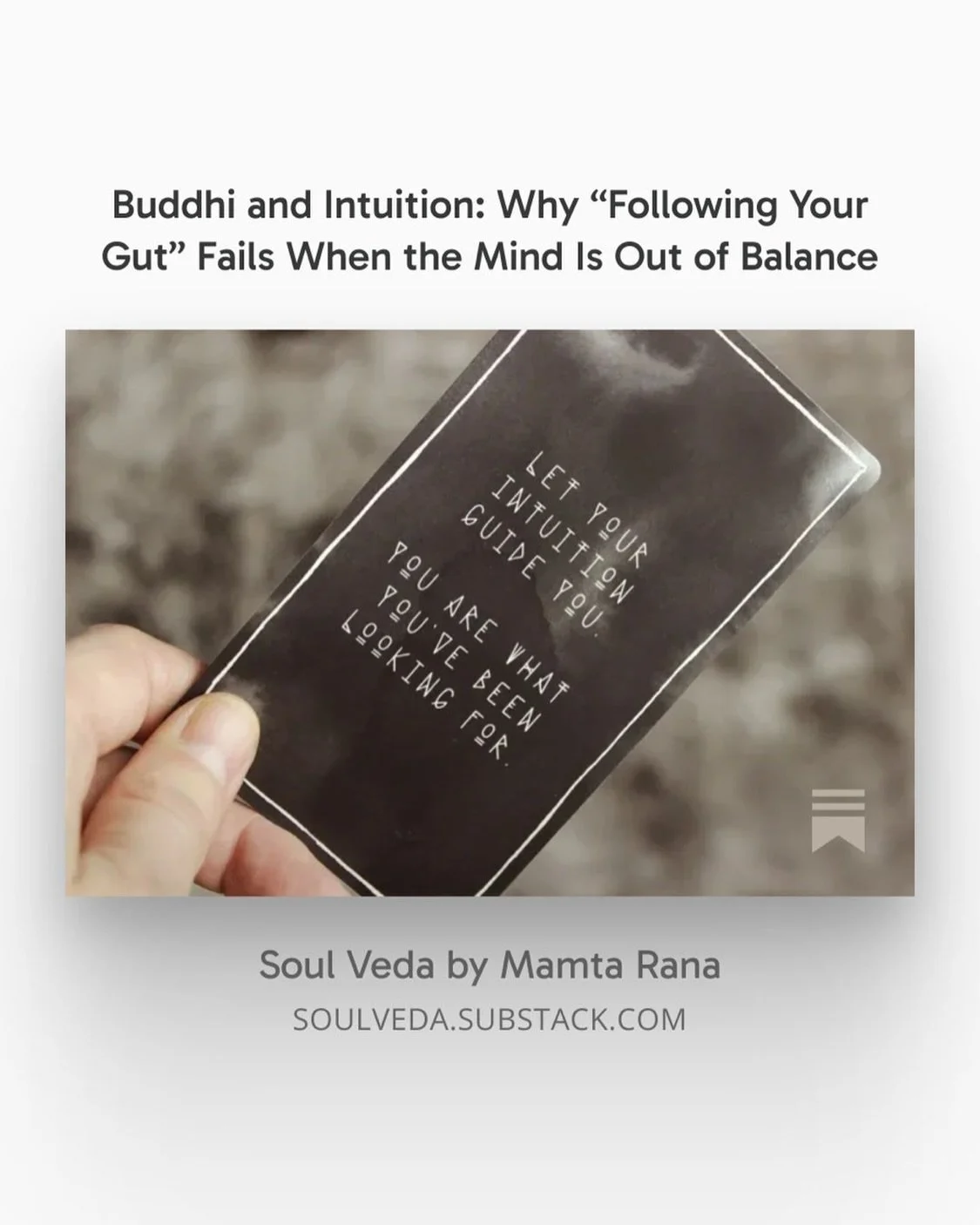
Buddhi and Intuition: Why “Following Your Gut” Fails When the Mind Is Out of Balance
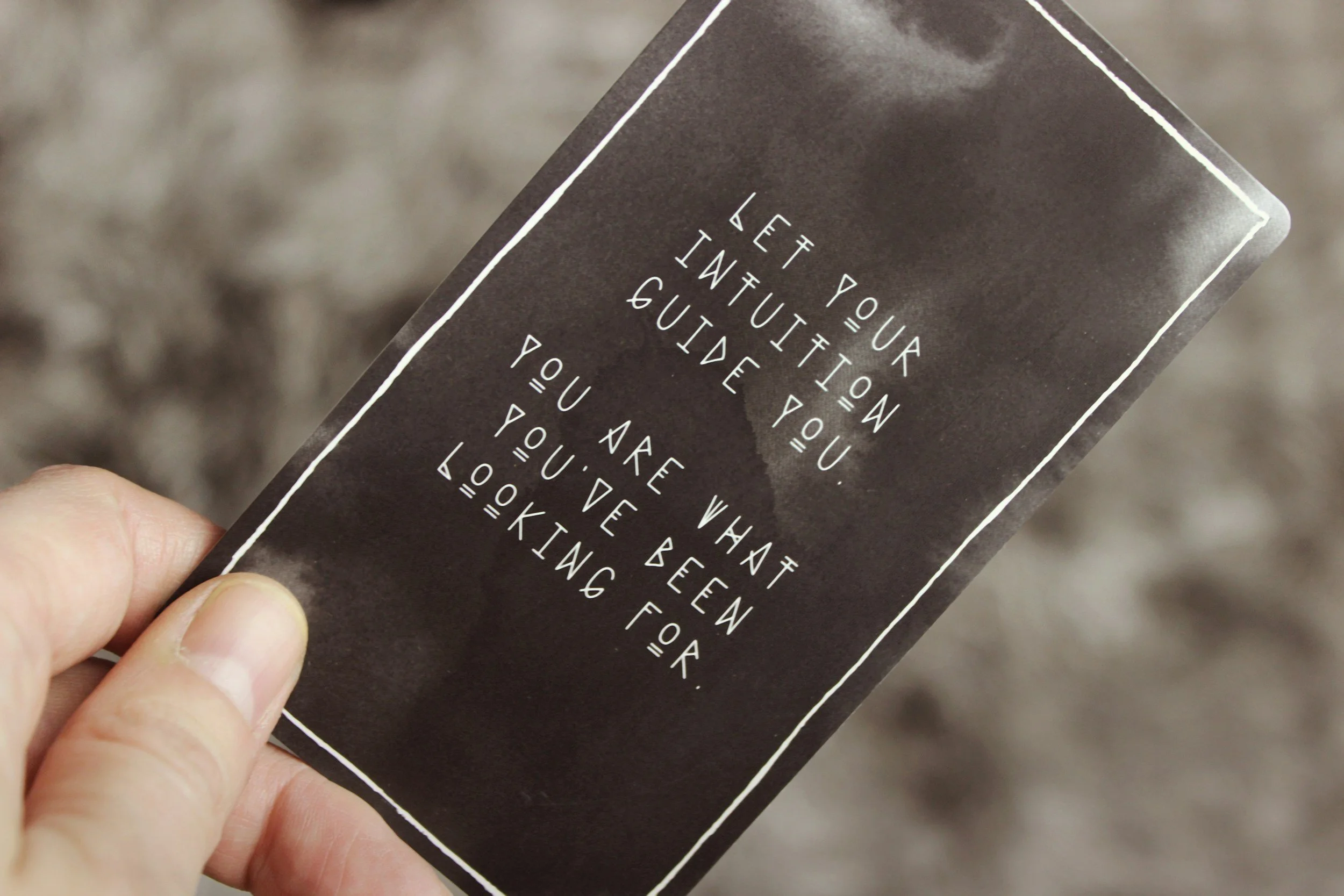
Intuition can be a super power when our mind-body-soul connection is balance. But is can turn into a curse, if this is not the case.
Today, I feel deeply aligned.
Aligned with my body.
Aligned with my intuition.
Aligned with something quieter and wiser inside me — something I have learned, over time, to trust again.
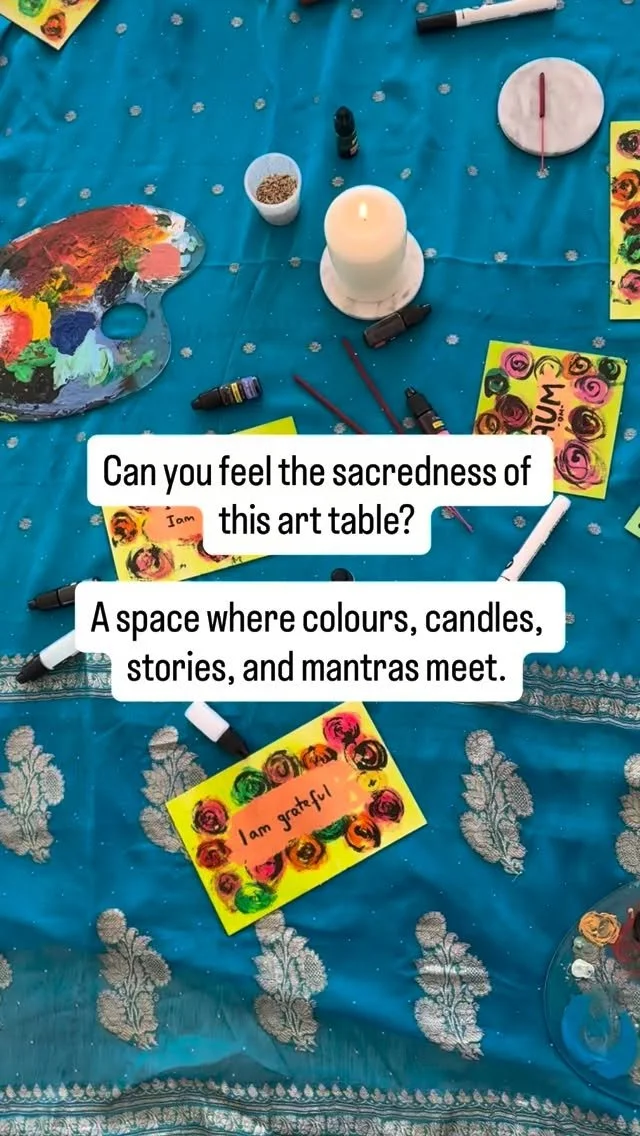
I sense it in subtle and tangible ways: in the feedback of clients who feel seen, in a fully booked live art workshop in Lisbon, in Ayurvedic clients noticing real shifts, in the way my community shows up — not out of obligation, but resonance. And in my body itself: nourished, steady, trusting the process.
There is no rush in this feeling. No need to prove anything.
Just a quiet confirmation: yes, this is it.
But it wasn’t always like this.
There were long phases when intuition felt confusing, unreliable, even misleading. When “listening to my gut” led to exhaustion rather than clarity. When advice like “just follow the flow” felt hollow, because the flow simply wasn’t there.
This article is born from that contrast — and from a question I return to again and again:
What does it actually mean to have intuition?
Curious about Ayurveda Therapy or Art Therapy but not sure which path to choose and where to begin? Give me a call, and let us find out together.
Is Intuition a Feeling?
We often speak about intuition as if it were something obvious.
As if it were simply a feeling that appears — and we just need to obey it.
But where does this feeling come from?
Is it emotional?
Is it instinctual?
Is it mental?
Is it the heart, the gut, the nervous system — or something spiritual, even divine?
And if intuition were that simple, why do some of the most intelligent, educated, capable people struggle so deeply with it?
Why do leaders who are brilliant strategists fail to build nourishing relationships — with others or with themselves?
Why do workaholics ignore burnout signals even when they fully understand the consequences?
Why do people force “healthy” routines so aggressively that they become unhealthy again?
Why do we see patterns of aggression, depression, jealousy, eating disorders, inferiority complexes — even in people who know better?
This is where Ayurveda offers a different lens.
Buddhi: The Forgotten Gatekeeper
In Ayurveda, intuition does not exist on its own.
It is deeply connected to Buddhi — often translated as intellect, discernment, higher intelligence.
But Buddhi is not just logic. It is not IQ. It is not thinking fast or cleverly.
Buddhi is our capacity to see clearly.
To distinguish truth from illusion.
To sense what is right beyond impulse and emotion.
To recognize when something feels aligned — and when it only feels familiar.
Intuition, in this sense, is not something mystical that floats above us.
It arises through Buddhi when Buddhi is clear, rested, and balanced.
And this is where things often go wrong.
Too Much Buddhi, Too Little Buddhi — Both Are a Problem
In Ayurveda, imbalance is rarely about lack.
More often, it is about too much.
Too much Buddhi — overstimulated, overworked, over-controlling — is usually driven by excess Rajas.
This is the Buddhi of constant analysis, optimization, ambition, pressure.
The Buddhi that never rests.
This shows up in:
chronic overthinking
perfectionism
inability to slow down
success without fulfillment
leaders who perform but cannot feel
people who intellectually understand burnout — and still ignore it
Here, intuition is not gone.
It is simply drowned out.
But the opposite is equally dangerous.
Too little Buddhi — foggy, suppressed, exhausted — can come from excess Tamas, or unstable Rajas.
This is when clarity is lost altogether.
This can look like:
confusion and indecision
emotional reactivity
impulsive behavior
depression or numbness
addiction patterns
eating disorders
jealousy, aggression, inferiority
giving up easily, or clinging desperately
Here, intuition becomes distorted.
What we call “intuition” is often fear, trauma, conditioning, or unmet needs.
Emotions Are Not Intuition
This may sound provocative, but Ayurveda is quite clear about this:
Unchecked emotions are not wisdom.
Strong emotions can disturb Buddhi rather than guide it.
Fear, desire, attachment, anger , yes even happiness, joy and ecstasy— when unprocessed — blur discernment.
This is why following feelings blindly can lead us away from ourselves instead of toward truth.
Intuition is not emotional intensity.
It is clarity.
When the Body Is Exhausted, Buddhi Suffers
There is another layer we often underestimate: the body.
If the body is inflamed, hormonally imbalanced, chronically ill, depleted, or overstressed, Buddhi simply cannot function well.
Fatigue clouds perception.
Pain steals attention.
Nervous system dysregulation distorts signals.
In this state, it becomes almost impossible to make clean intuitive decisions — because intuition is filtered through exhaustion.
Here, the work is not “listen harder.”
It is heal first.
When Environment Pulls Us Away from Ourselves
Sometimes the imbalance is not internal at all — but environmental.
Constant pressure.
Overstimulation.
Unrealistic expectations.
Unsafe work cultures.
A life that constantly pulls us away from authenticity.
Over time, this chips away at Buddhi.
And eventually, at the body too.
The Ayurvedic Path Back
This is why Ayurveda works so gently — and so deeply.
It does not separate body, mind, and spirit.
It does not rush clarity.
It rebuilds strength, stability, and trust step by step.
When the body feels safe again, Buddhi softens.
When Buddhi softens, discernment returns.
And only then can intuition be trusted again.
How to find out what is stuck in your body?
Book You Ayurvedic Assessment
Take the first step towards a healthy Buddhi & Intuition
But What If Buddhi Is Just Tired?
Not everyone is sick.
Not everyone is traumatized.
Sometimes Buddhi is simply overstimulated.
Foggy from too much input.
Too much pressure.
Too much ambition.
Too much excitement even.
This is often the moment people are told to meditate.
But a disturbed Buddhi often cannot sit still.
Silence feels unbearable.
Stillness feels threatening.
And this is where creative therapy becomes powerful.
Why Creativity Heals Buddhi
Creative practices — art therapy, mantra art, embodied creation — gently guide the mind into a meditative state without force.
They regulate the nervous system.
Engage the senses.
Create emotional safety.
Allow Buddhi to rest without collapsing.
They don’t demand silence — they invite presence.
This is why creativity is not a luxury.
It is a bridge back to clarity.
Book an 30 min discovery Call with me, if you would like to try out 1:1 Art Therapy or learn more about my Community Events
Intuition Is Not Found — It Is Restored
A healthy relationship with intuition is not about magic or talent.
It is about conditions.
When the body is nourished.
When Buddhi is rested.
When emotions are acknowledged but not ruling.
When life is aligned enough to hear subtle signals again.
Intuition then becomes what it always was:
Quiet.
Steady.
Unforced.
And deeply trustworthy.
This is why I wrote this article.
Not to romanticize intuition — but to bring honesty to it.
To offer clarity where confusion exists.
And to remind you that if intuition feels lost, it is not gone.
It is waiting for the right conditions to return.
And those conditions can be cultivated.
Gently.
Patiently.
Sustainably.
Mamta
www.soulveda.art