
Insights & Reflections
Explore writings on Ayurveda, art therapy, emotional well-being, and seasonal wisdom. These reflections are here to support your journey toward balance, clarity, and deeper self-connection.

When Meditation Is Misunderstood By The Western-World
In a world drowning in burnout, anxiety, and over-stimulation, many people turn to meditation and breathwork hoping for peace — only to feel more overwhelmed, disconnected, or ungrounded. This long-form essay explores why these practices often fail today, and what the Mahabharata, the Bhagavad Gita, Ayurveda, and Yoga philosophy actually teach us about building true resilience.
Through the lens of Krishna’s guidance to Arjuna, we see that meditation was never meant to be a quick-fix, performance-enhancing tool. Instead, the ancient texts reveal a precise sequence: clarity before stillness, alignment before meditation, dharma before discipline. When the gunas (sattva–rajas–tamas) and doshas (vata–pitta–kapha) are imbalanced, the mind is not ready for meditation — and practices like pranayama or fast breathwork can destabilize the nervous system even further.
This article exposes how Western wellness and corporate culture have misused ancient holistic sciences — turning Yoga, Ayurveda, and meditation into productivity hacks rather than paths toward inner freedom. It explains why “one-size-fits-all” breathwork, mindfulness, and resilience programs often amplify imbalance instead of healing it, and how tamasic withdrawal, rajasic overdrive, and Vata derangement have become normalized as “self-care.”
If meditation isn’t working for you, if breathwork feels good only for a moment but doesn’t bring long-term balance, or if you feel disconnected from yourself despite “doing all the right things,” this piece reveals why — and shows how to rebuild inner stability through the original wisdom traditions that understood the nervous system long before modern science.

What Is Maya? Understanding Illusion in Life, Spirituality, and Ayurveda
Maya, often described in Hinduism and Vedānta as the great illusion, shapes how we see ourselves, others, and the world. It is the gap between appearance and reality—the polished life that hides struggle, the illness that seems only destructive, the stories our mind creates that keep us trapped in suffering. In this article, we explore what Maya truly means in spirituality, how it influences daily life, and how Ayurveda offers practical tools to see through illusion. From balancing the doshas and cultivating sattva (clarity), to easing mental suffering through Ayurvedic psychotherapy and art therapy, you will discover how to reconnect with Satya—the deeper truth of gratitude, resilience, and acceptance that lies beyond illusion.
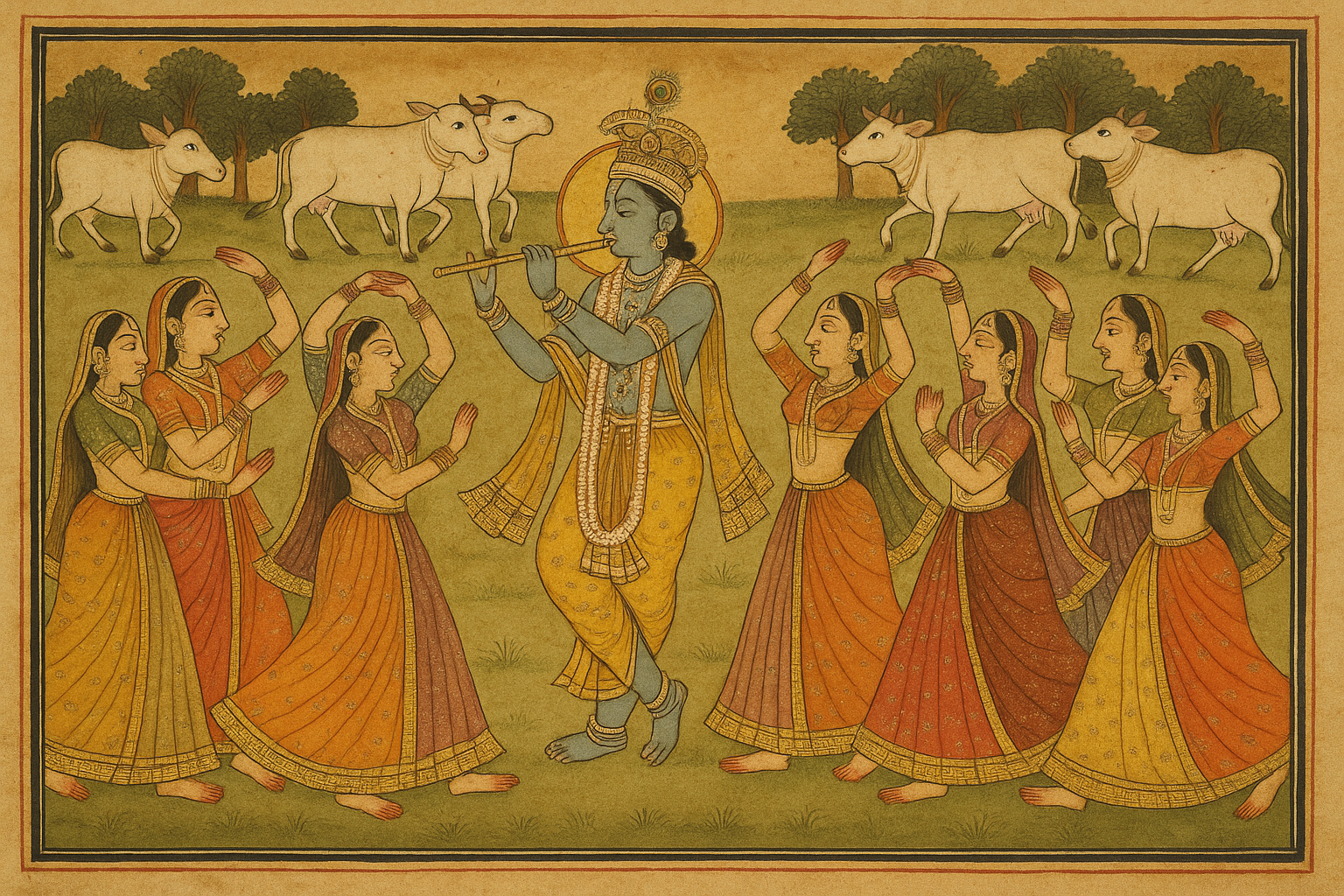
Krishna - the Playful Friend, Mentor and Reformer of Devotion
Discover the extraordinary life of Krishna—from his divine birth to Devaki, miraculous childhood stories in Vrindavan (butter-stealing, raas-leela dance, vanquishing the serpent Kaliya), his triumphant return to Mathura to defeat Kamsa alongside Balarama, and his pivotal role in the Mahabharata and the Bhagavad Gita’s timeless teachings. This comprehensive Krishna life story explores every facet of the avatar of Vishnu: childhood miracles, cosmic revelations, the restoration of dharma, and spiritual wisdom that continues to inspire.

The Story of the Mahabharata
The Mahabharata is an ancient Indian epic that tells the story of the Pandavas and Kauravas—cousins whose rivalry leads to the great Kurukshetra war. With themes of dharma, destiny, and justice, it explores divine births, Draupadi’s unique marriage, palace intrigue, and the timeless battle between right and wrong.

The Ramayana: A Soulful Retelling Through the Lens of Dharma
The Ramayana: A Journey Through Dharma, Devotion, and Choice. The Ramayana is not just an epic—it is a reflection on Dharma in its many forms. Through Rama’s sacrifice, Sita’s dignity, Lakshmana’s loyalty, Hanuman’s devotion, and Ravana’s downfall, the story reveals how duty, love, power, and ego shape our lives. Set in the 2nd Yuga, the Ramayana explores idealism, righteous action, and inner alignment. Each character embodies a unique path of Dharma—reminding us that Dharma is not one truth, but a spectrum of evolving, deeply human choices.

Shiva: The God Who Is More Human Than Us
Who is Shiva? Read this article to understand how his stories are reflections of our own struggles and how in a world that values control and certainty, Shiva reminds us where the true power lies in.

Eternal Echoes: The Love, Loss, and Lessons of Rama and Sita
The story of Rama and Sita teaches us that true love is a journey of resilience, loyalty, and selflessness, reminding us to cultivate love through compassion, integrity, and the courage to let love grow freely. Read this article to find out who was Rama and Sita. Why and when did Ravana turn evil? Learn 5 golden rules of how to cultivate Love.

Navratri: A Journey of Spiritual Power and Reflection
Navratri is a Hindu festival that spans nine nights (and ten days), dedicated to honoring Goddess Durga and her nine powerful forms. Read this article and learn what it teaches us about the eternal struggle between good and evil, and how it is celebrated in India.

Celebrating Holi
Holi is a vibrant Hindu festival also known as the "Festival of Colors" or the "Festival of Love”. Read this article and understand why it is one of the favorite Hindu festivals amongst young and old.